
As Netflix swoops on Warner Bros in a record breaking takeover, British crews, studios and filmmakers are asking the same question: is this the start of a golden age for UK production, or the beginning of dangerous over consolidation?
London, 5 December 2025
Netflix has agreed to acquire Warner Bros Discovery’s film, television and streaming businesses in a cash and stock deal that values the studio at about 72 billion dollars in equity and roughly 82.7 billion dollars in enterprise value, with a price of 27.75 dollars per share for Warner Bros Discovery investors. Competing offers from Paramount, Skydance and Comcast were beaten in a frantic bidding war, giving Netflix control of franchises such as Harry Potter, DC, Game of Thrones and the entire HBO operation, while Warner’s linear channels including CNN and Discovery brands are being spun out into a separate company called Discovery Global.
In Hollywood this is being called a once in a generation deal. In the UK, where Warner and Netflix already spend heavily on production and studio facilities, the consequences may be felt even more sharply.
Below is what UK filmmakers, crews and production companies need to know now.
1. What exactly has Netflix bought?
Under the agreement announced on 5 December, Netflix is set to acquire:
- Warner Bros film and TV studios, including Warner Bros Pictures and Warner Bros Television
- HBO and HBO Max, with their full libraries of premium drama and comedy
- DC Entertainment and DC Studios, with the DC superhero slate
- Warner Bros Games, including franchises such as Hogwarts Legacy and Mortal Kombat
- Global distribution, licensing and consumer products arms, giving Netflix a far deeper theatrical and retail footprint than it has ever had
Excluded from the deal are:
- CNN, Cartoon Network, Adult Swim, TNT, TBS and Discovery branded factual channels
- The Discovery Plus streaming service
These will sit in a separate business, Discovery Global, once the spin off completes, currently expected in 2026.
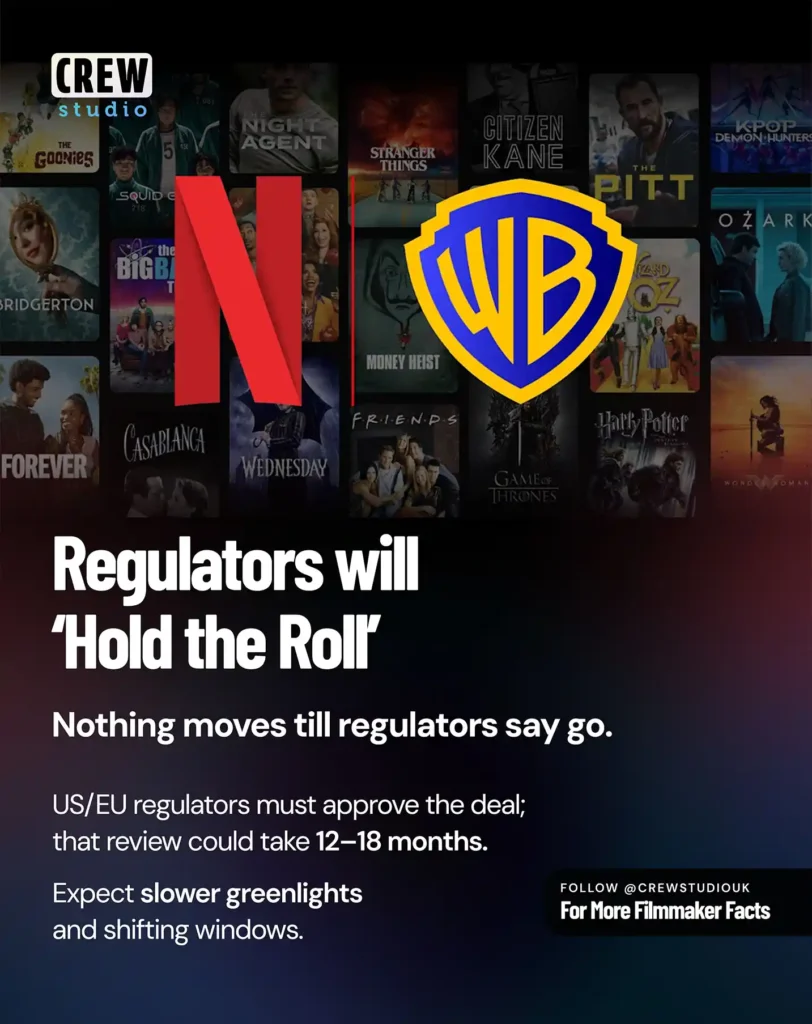
Regulators in the United States, the European Union and the United Kingdom still need to approve the deal, which could take twelve to eighteen months and may involve conditions.
For now, however, the direction of travel is clear. Netflix is no longer just the world’s largest streaming platform. It is about to become the owner of one of the most important studio groups on earth.
2. Why this matters so much to the UK
Britain has quietly become one of the world’s production superpowers. Film and high end television spend in the UK reached more than 5.6 billion pounds recently, driven largely by inward investment from studios such as Warner Bros, Disney, Netflix, Amazon and Apple.
Warner Bros has long been embedded in the British ecosystem. It owns Warner Bros Studios Leavesden in Hertfordshire, home to the Harry Potter films, Fantastic Beasts and a long list of US and UK productions, following a 100 million pound investment and acquisition in 2010.
Netflix, meanwhile, has become one of the most active commissioners of UK scripted series and films and already leases significant stage space across the country.
Put those two together and you get:
- A single company controlling a vast chunk of US studio spend in the UK
- Netflix’s global distribution power combined with Warner’s physical studio footprint, crews and post production base
- Enormous bargaining power when negotiating with British talent, independent producers and exhibitors
For UK filmmakers this could mean larger budgets and more ambitious projects. It could also mean fewer buyers with more leverage.
3. The potential upsides for the UK film industry
More inward investment and bigger shows
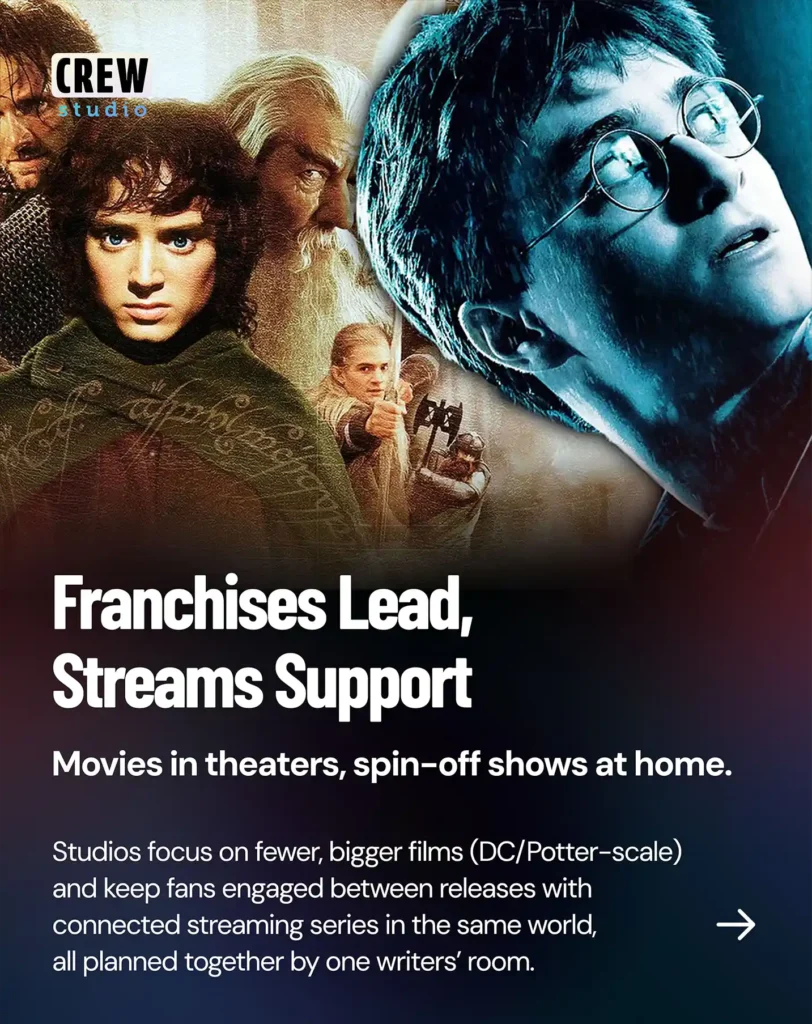
Netflix is buying Warner not to shrink output but to feed a global audience and keep subscribers and advertisers hooked. Analysts point to planned cost synergies of 2 to 3 billion dollars a year, but much of that is expected to come from back office consolidation, marketing and overlapping technology rather than a wholesale retreat from production.
The UK remains one of the easiest places in the world to shoot:
- World class crews and post production
- A favourable time zone for US studios
It is difficult to imagine Netflix walking away from that. If anything, having direct control of Leavesden and the broader Warner infrastructure could lock even more production into the UK for flagship titles such as Harry Potter, DC features and HBO style fantasy shows.
For UK crews and HoDs this may translate into:
- More long running franchise jobs on series and features
- Increased demand for highly specialised skills, including virtual production, large scale set building and high end VFX
- A deeper pipeline of mid level roles for assistant directors, camera teams, production managers and co producers
One roof for streamers and studio
For writers, directors and producers, the idea of being able to take a project to one entity that controls both the streaming outlet and a major studio machine could be attractive.
In theory, a project that might once have bounced between HBO, Warner Bros Pictures, Sky Atlantic and Netflix now has a more straightforward path. If the combined company integrates its commissioning structures sensibly, you could see:
- Clearer genres and brand lanes
- Simpler decision making for global rights and windowing
- The possibility of theatrical plus streaming hybrid releases backed by a single marketing team
In other words, if you are developing a grounded British crime drama or fantastical YA series and want a single global patron with pockets deep enough to build out a franchise, Netflix plus Warner is hard to ignore.
Stronger argument for long term UK commitments
The merger lands at a time when UK politicians and regulators are already scrutinising the role of streamers and talking openly about levies or obligations tied to UK production. MPs have floated ideas such as a levy on Netflix and other services to support British drama and protect distinctive UK stories.
With such a large deal on the table, it becomes politically easier for the government to insist on:
- Binding commitments to minimum annual UK spend
- Skills and apprenticeships programmes in partnership with ScreenSkills and the BFI
- Support for regional production hubs outside London
If regulators make those commitments a condition of approval, UK film and television could benefit from a more secure, long term investment pipeline.
4. The risks and fears: less competition, squeezed independents, fragile cinemas
The optimism sits alongside real anxiety, particularly in Europe.
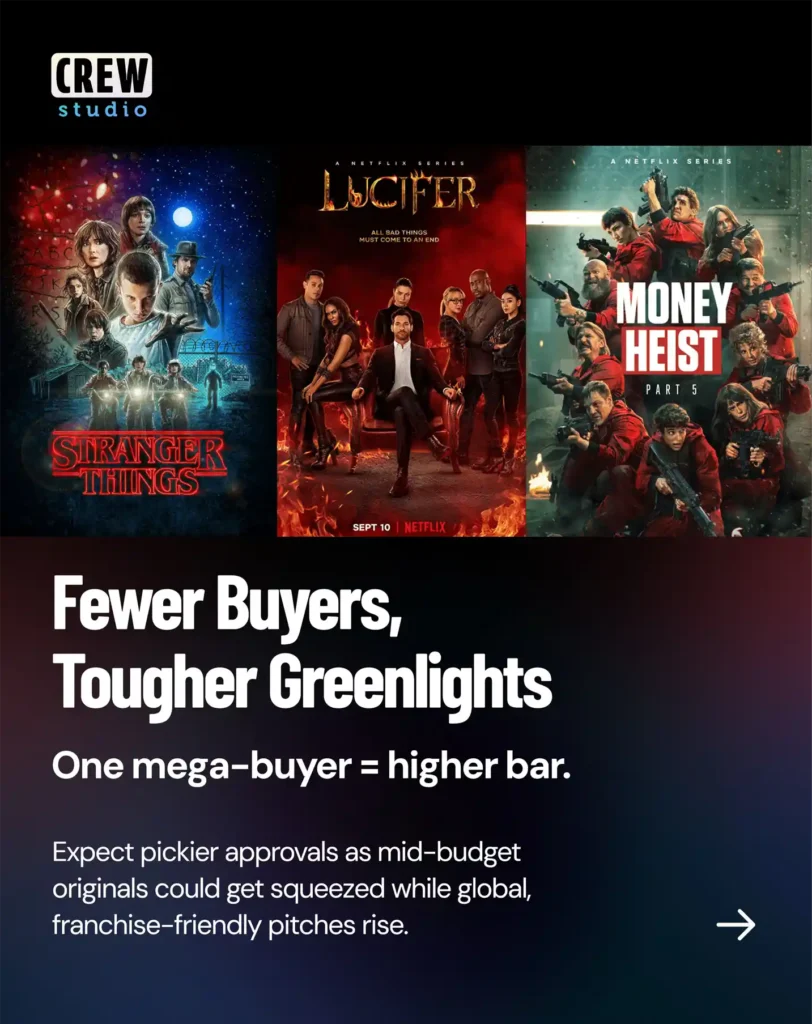
Fewer buyers, more leverage
On both sides of the Atlantic, producers and politicians worry that combining Netflix and Warner will concentrate too much power over commissioning, pricing and rights. A coalition of film producers has already urged US lawmakers to block the deal, warning of an economic and institutional crisis if it proceeds unchecked.
For UK independents, the concern is straightforward:
- Two major buyers of premium drama and features effectively become one
- That new giant has enough scale to shift more production in house, reducing opportunities for third party producers
- Negotiating power over license fees, back end participation and rights retention shifts sharply in favour of the studio streamer
These worries sit on top of a longer running fear that the rise of streamers could weaken the financing model for UK independent films, which has already been under strain.
Threat to UK cinemas and theatrical windows
Warner Bros has historically been one of the pillars of UK cinema: big DC superhero titles, prestige awards films and crowd pleasers such as the Harry Potter series are vital to box office and concession revenues.
Netflix, by contrast, has treated theatrical release largely as a marketing and awards play, typically with short cinema windows before films revert quickly to streaming. European exhibitors have long complained about that approach.
The main European cinema body, UNIC, which represents operators across 39 countries with about 43,500 screens, has already denounced the Netflix Warner deal, warning that it fails basic tests of protecting diversity, access and cinema viability and predicting significant cinema closures if it is approved unchanged.
If Netflix were to push more Warner titles straight to streaming, or radically shorten UK theatrical windows, independent and regional cinemas could suffer.
If, however, regulators force the combined company to honour robust theatrical commitments for major titles, Netflix might evolve into something closer to a traditional studio in its treatment of cinemas. For filmmakers who love the big screen, this is one of the most important questions in the entire deal.
Cultural diversity and British storytelling
UK MPs have already expressed concern that streaming consolidation could erode distinctly British stories and voices.
A merged Netflix Warner will command huge influence over what kinds of British narratives travel globally. The risk is that:
- Local stories are greenlit only if they can be reframed as global genre pieces
- Regional and minority voices struggle to compete against safe franchise extensions
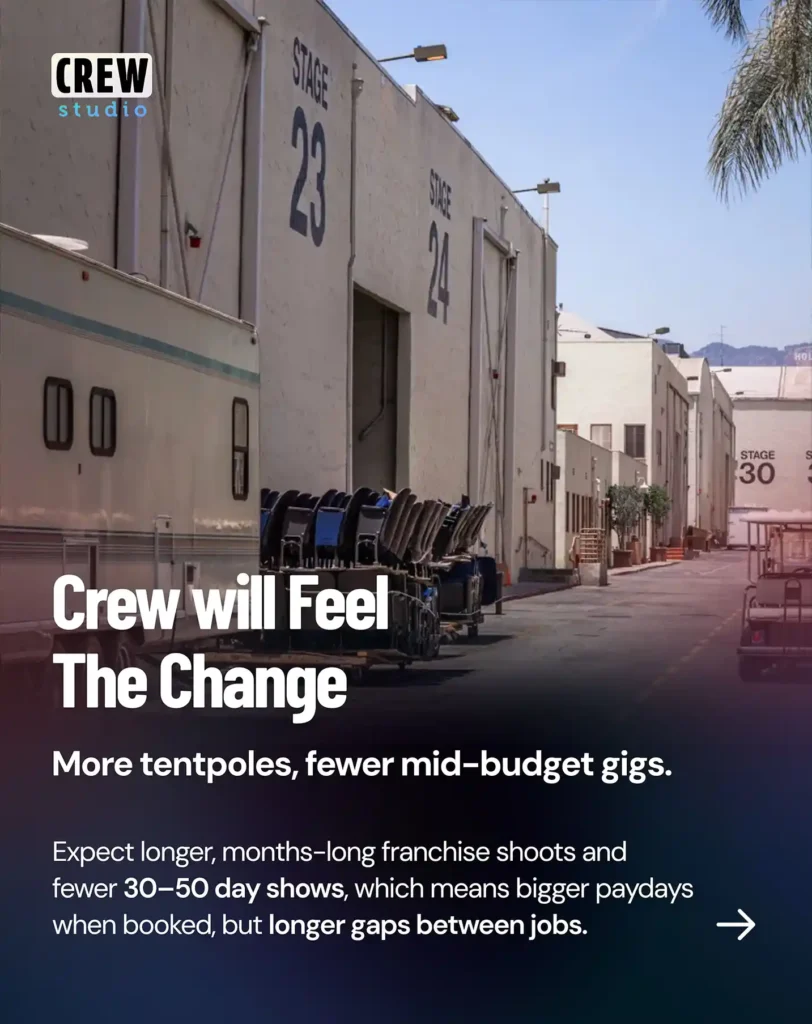
- Mid budget British cinema, already fragile, becomes even harder to finance if the new giant leans towards mega budget tentpoles and cheap, unscripted formats
For working filmmakers, the danger is not a total lack of work but a narrowing of the kinds of work that get meaningful support.
5. What UK regulators might do
The UK Competition and Markets Authority is almost certain to examine the deal. UK lawmakers were already raising concerns about streaming consolidation even before Netflix emerged as the winning bidder, asking the government how it would respond to further concentration in the sector.
Possible UK conditions could include:
- Commitments on UK production levels
A minimum spend per year on UK film and high end television, potentially tied to regional quotas. - Protection for independent producers
Requirements that a certain proportion of UK commissions use qualifying independent production companies on fair terms and allow some rights retention or profit participation. - Theatrical and windowing undertakings
Guarantees on minimum theatrical runs in the UK for major titles, protecting exhibitors and cinematic culture. - Skills and training obligations
Formal partnerships with ScreenSkills, universities and colleges to tackle skills gaps and support entry level talent, responding to concerns already raised in evidence to parliament.
How tough the CMA chooses to be will set the tone not only for this merger, but for the next decade of media consolidation in Britain.
6. If you are a UK filmmaker, what should you be thinking about?
This is a corporate mega deal, but the questions on set and in writers rooms will be very human. Does this help my career, or hurt it?
In the short term: business mostly as usual
- The deal is not expected to close until late 2026 at the earliest, after the Discovery Global spin off and regulatory approvals.
- Existing contracts with Warner Bros, HBO and Netflix remain in force. Projects in prep or production will not suddenly vanish because of a press release.
- Both companies will need a strong slate to prove to regulators, investors and audiences that the merger is about growth rather than retreat. There is no incentive to switch off the content tap now.
If you are currently in conversation with Netflix or Warner’s UK teams, keep those talks moving. A strong package with solid talent and finance is still attractive.
In the medium term: understand the new map
Once the dust settles, expect:
- Reorganisation of commissioning teams
Some commissioners will leave; others will gain bigger portfolios that span both Netflix and HBO style brands. Track where your existing champions land. - Clearer brand lanes inside one giant
There may be a “prestige drama” lane, a “global genre” lane and a “family franchise” lane. Shape your slate with these in mind. - A more formal development culture
As the combined company looks for scalable IP, expect more emphasis on book adaptations, game crossovers, and existing universes alongside distinctive originals.
For you, this suggests three parallel strategies:
- Build franchise fluent projects
If you enjoy playing in big sandboxes, think in terms of worlds and returning characters. How could your idea sit beside Harry Potter, DC or HBO style fantasy without feeling derivative? - Protect your independence
Do not rely solely on one buyer. Keep relationships warm with the BBC, Channel 4, ITVX, Sky, Amazon, Apple and European partners. Co productions and gap financing will matter even more if one mega buyer becomes tougher on fees and ownership. - Invest in your own leverage
For writers and directors, that means recognisable voice, festival visibility and a track record of delivery. For producers, it means strong finance skills, packaging power and a clear value proposition beyond being a service provider.
For crews and below the line talent
- Consider upskilling into areas Netflix and Warner will need at scale: virtual production, large scale VFX, intimacy coordination, sustainability management and cross border production management.
- Regional bases may see even more work as the combined company looks beyond London for capacity. Keep an eye on studio expansions and opportunities in hubs such as the North, Scotland, Wales and Northern Ireland.
7. What to watch over the next 24 months
As the deal progresses, there are a few signposts UK filmmakers should monitor closely:
- Regulatory signals
Early statements from the CMA, Ofcom and DCMS select committees will reveal how tough a stance the UK intends to take on streaming consolidation and cultural obligations. - Commitments on UK spend
Does Netflix publicly commit to specific UK investment targets as part of its lobbying effort. If so, that can strengthen your negotiating hand when arguing that your project should be made here rather than elsewhere. - Theatrical strategy
Watch how Netflix treats Warner’s upcoming slate. If it preserves or even lengthens cinema windows for certain titles, that bodes well for UK exhibitors and filmmakers who care about theatrical impact. If windows shrink, pressure on cinemas and independent film will intensify. - Internal culture and exits
Which executives stay and which leave will change what gets made. Track where key Warner and HBO commissioners with a history of backing British talent move next. New homes can become new opportunities. - Industry wide bargaining
Unions and guilds in the US and Europe are already wary of consolidation. Any new collective agreements on pay, AI, residuals and rights will indirectly shape deals in the UK too.
The bottom line
Netflix’s takeover of Warner Bros is not just another media deal. It is the moment the world’s dominant streamer becomes a fully fledged studio owner with deep roots on British soil.
For the UK film industry, that could lock in a decade of high volume, high budget work, anchored around Leavesden, British crews and a powerful pipeline of franchises. It could also reduce competition, squeeze independent producers and hasten a shift away from cinemas if regulators and policymakers do not hold their nerve.
If you are a filmmaker in Britain, the practical message is clear:
- Keep pitching, because the new giant will be hungry for stories.
- Keep diversifying, because no single buyer can ever be trusted to look after your career.
- Stay informed and organised, because the fight over what this deal becomes is only just beginning, and UK talent has more power in that conversation than it sometimes realises.